
How Can Beginners Use ViaBTC TX Accelerator for Bitcoin?
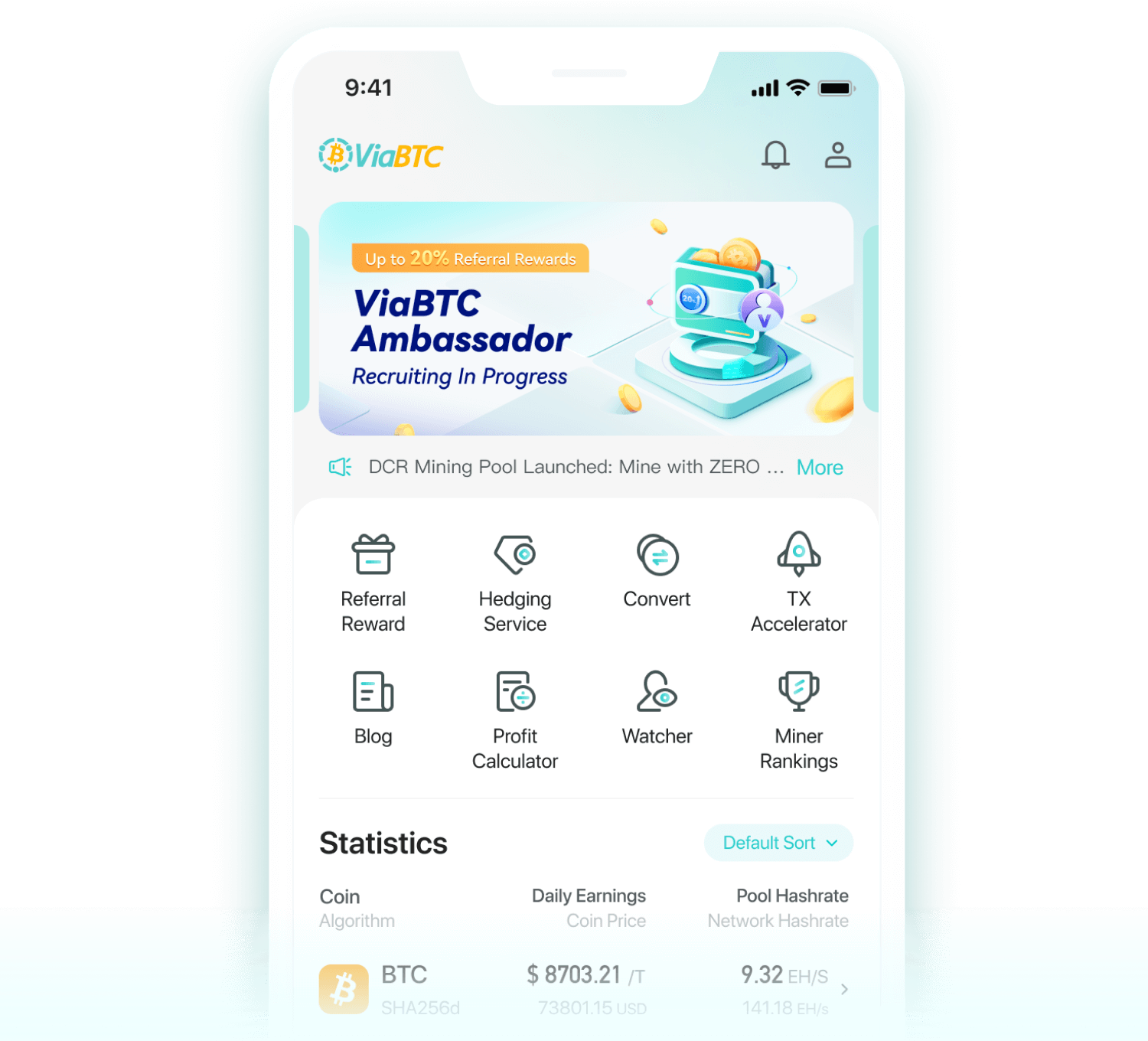
ViaBTC TX Accelerator lets a beginner submit an existing Bitcoin TXID for faster mining priority without changing the recipient, amount, or private keys. For free acceleration, ViaBTC lists a maximum transaction size of 0.5 KB and a minimum fee rate of 0.0001 BTC/KB. Its May 2024 help documentation states 20 free submissions per hour, although the live tool displays current availability at submission time. Paid acceleration accepts BTC, BCH, or LTC for the service charge. Confirmation is still tied to block production: Bitcoin targets roughly one block every 10 minutes, so acceleration improves mining priority but cannot promise an exact confirmation time.
A beginner should start with the TXID, not the wallet address. A Bitcoin TXID is the public identifier for a transaction already broadcast to the network, and it can usually be copied from a wallet transaction page or an exchange withdrawal record. Before opening ViaBTC, paste that TXID into a reputable block explorer and confirm that the transaction still shows zero confirmations. Bitcoin has operated since 2009, and its public ledger allows anyone to inspect confirmation status without revealing a seed phrase or private key.
That first check matters because a delayed transaction is not always a fee problem. A transaction may have been confirmed while a wallet interface has not refreshed, it may depend on an unconfirmed parent transaction, or it may not have propagated well enough for ViaBTC's node to see it. ViaBTC's support material says a "Tx hash not found" message can appear when the transaction has not reached its mempool and recommends rebroadcasting it before another acceleration attempt.
Never enter a seed phrase, private key, or wallet recovery phrase into an accelerator. The service works from public transaction information, mainly the TXID.
After verifying the TXID, the free route is worth checking before paying. ViaBTC's published free-service limits are specific: transaction size must be no more than 0.5 KB, while the fee rate must be at least 0.0001 BTC/KB. Size here refers to blockchain data, not the number of bitcoins transferred. A 0.2 BTC payment can occupy fewer bytes than a 0.002 BTC transaction if the smaller payment uses many inputs.
That distinction comes from Bitcoin's UTXO structure. A wallet spending five old outputs generally creates more transaction data than one spending a single output, so two payments with the same BTC amount can have different sizes and fees. ViaBTC's May 2024 help article states that free requests are processed in submission order and describes 20 free acceleration opportunities per hour; the live accelerator page also displays current availability, so users should read the number shown when they submit rather than assume capacity is always open.
A practical free submission can be handled in five steps:
-
Copy the exact TXID from the sending wallet or exchange.
-
Confirm zero confirmations on a Bitcoin block explorer.
-
Sign in on ViaBTC's official accelerator page.
-
Check size, fee rate, and the available free quota.
-
Submit once, then continue monitoring the same TXID.
No replacement transaction is created by that process. The recipient address and BTC amount remain part of the original transaction, and the TXID being monitored stays the same. ViaBTC says an accepted free request is prioritized for inclusion in the next block mined by its pool, although block discovery itself cannot be scheduled to an exact minute.
Bitcoin's target block interval is about 10 minutes, equivalent to roughly 144 blocks in a 24-hour period under ideal long-run timing. Real intervals vary considerably: two blocks can arrive only seconds apart, while another interval may exceed 30 or 40 minutes. For that reason, a successfully accelerated transaction can still remain pending while ViaBTC or a cooperating pool waits to find a block.
ViaBTC's current Bitcoin statistics provide useful scale. In September 2026, the site reported about 938.03 EH/s of Bitcoin network hashrate and about 98.79 EH/s for its own pool, equal to roughly 10.5% when the two figures are compared. The displayed 3-day pool luck was 98.44%, while 7-day luck was 91.05%; mining results do not follow a fixed clock even when a pool controls substantial hashrate.
Users who want to inspect the operator's current pool data can view the ViaBTC BTC Mining Pool page. Pool size helps explain why acceleration can be useful, but it should not be read as a guarantee that one specific pending transaction will enter the next Bitcoin block.
Paid acceleration removes the free-quota issue and follows a different payment flow. ViaBTC asks the user to enter the TXID, calculates an acceleration price, and currently allows BTC, BCH, or LTC for payment. Its support documentation says the quoted amount can vary with transaction size and current cryptocurrency prices rather than following one permanent flat charge.
| Point to compare | Free service | Paid service |
|---|---|---|
| Separate acceleration fee | No | Yes |
| TXID required | Yes | Yes |
| Published size rule | ≤ 0.5 KB | Quoted separately |
| Published minimum rate | ≥ 0.0001 BTC/KB | Price calculated by service |
| Payment asset | None | BTC, BCH, or LTC |
| Exact confirmation time | Not guaranteed | Not guaranteed |
The paid process also has broader mining-pool handling in ViaBTC's help documentation. After payment is received, ViaBTC says cooperating mining pools can be notified so that a participating pool may select the submitted transaction when it finds a block. The same 2024 documentation states that timing still depends on transaction fees, congestion, and when participating pools produce blocks, so users should not treat a paid order as a fixed-time delivery service.
A low fee is only one reason a submission may fail. ViaBTC lists transactions above 0.5 KB, free quotas already consumed, unconfirmed preceding transactions, and double-spend transactions among the cases that can prevent free acceleration. An unconfirmed parent deserves extra attention because a child transaction cannot be confirmed normally until miners can also include the transaction that created the input it is spending.
For example, suppose Transaction A pays an address and Transaction B immediately spends that still-unconfirmed output. Accelerating B alone may not solve the sequence because miners need A first or must include the package in acceptable order. A beginner seeing two related unconfirmed TXIDs should inspect both rather than repeatedly submitting only the later one.
Wallet fee tools may offer another route. Replace-by-Fee, or RBF, allows a sender to broadcast a replacement version with a higher miner fee when the original transaction was created with replaceability enabled. ViaBTC acceleration differs because it asks miners to prioritize the existing TXID instead of asking the sender to create a higher-fee replacement.
CPFP, or Child Pays for Parent, works differently again. A user controlling an output from the pending transaction creates a child transaction with a fee high enough to make the combined parent-and-child package attractive to miners. Since the April 2024 Bitcoin halving, the block subsidy has been 3.125 BTC, while transaction fees are added to miner revenue, giving miners an economic reason to prefer transactions or packages paying stronger fee rates.
The simplest choice depends on wallet access and urgency:
-
Use RBF when the wallet supports fee replacement and the sender controls the transaction.
-
Consider CPFP when a spendable output from the pending transaction is available and the wallet supports the method.
-
Try ViaBTC free acceleration when the transaction meets the published 0.5 KB and 0.0001 BTC/KB limits.
-
Review paid acceleration when waiting carries more cost than the quoted service charge.
One more check should happen before paying. ViaBTC states that an acceleration submission cannot be canceled after submission and that the service is not refundable once submitted. Copying one wrong character in a TXID therefore deserves more attention than the speed of completing the form; compare the first and last several characters with the wallet record before approving payment.
Bitcoin itself also has fixed supply data that helps put miner behavior in context. ViaBTC's September 2026 statistics listed 21 million BTC as the maximum supply, about 20.08 million BTC already circulating, and about 4.39% remaining to be mined. As the subsidy falls over successive halvings, transaction fees continue to form part of miner compensation, so fee selection remains part of how limited block space is allocated.
For a first-time user, the safest routine is therefore operational rather than technical: verify the TXID, check whether it is still unconfirmed, inspect its size and fee rate, identify any unconfirmed parent, compare free eligibility with the live ViaBTC page, and pay only after checking the quoted amount. Keep monitoring the original TXID afterward; one confirmation shows that the transaction has entered a block, while later blocks add further confirmations without requiring another acceleration request.
Get the weekly brief.
One long-read, every Friday. The dashboards other analysts won't show you, the post-mortems the vendors hope you skip.