
Is it legal to marry a chatbot?
No. As of 2026, no country legally recognizes a marriage between a human and a chatbot. Marriage laws generally require two legally recognized people who can give informed consent, own property, accept legal duties, and exercise legal rights. AI chatbots can simulate conversations and emotional responses, but they do not have legal personhood. Even if someone holds a symbolic wedding with an AI companion, the relationship does not create legal status for inheritance, taxation, immigration, medical decisions, or family law. As AI becomes more common, lawmakers continue discussing new legal questions, but no legal system currently treats a chatbot as a spouse.
Artificial intelligence has changed rapidly over the past five years. Consumer AI applications grew quickly after 2022, and millions of people now interact with chatbots every day for conversation, writing, entertainment, and emotional support. Some AI companion platforms report user communities measured in the tens of millions. As conversations become longer and more personal, some users begin asking whether an AI partner could ever become a legal husband or wife. That question leads to a legal discussion rather than a technology discussion.
Marriage has always been more than two people saying they love each other. In countries including the United States, the United Kingdom, Canada, Australia, Germany, and France, marriage creates legal responsibilities covering property, inheritance, taxation, medical decisions, child custody, and financial support. Those responsibilities require both parties to exist as legal persons. A chatbot can generate natural conversation, but it cannot register property ownership, file taxes, appear in court, or become legally responsible for another person's obligations.
Because legal identity comes before marriage, consent also becomes part of the discussion. Most legal systems require both people to understand the agreement and voluntarily accept it. A chatbot produces responses through machine learning models and programmed instructions rather than independent legal intention. It can answer "yes" to a marriage proposal, but current law does not treat that response as informed legal consent. That difference keeps symbolic relationships separate from legally recognized marriages.
Several public examples have attracted attention over the past decade. Some individuals have held wedding ceremonies with virtual characters, holograms, or AI companions. Those ceremonies received media coverage, but governments did not register them as marriages. They were treated as personal celebrations instead of legal family relationships. By 2025, no national marriage registry accepted an AI system as a spouse, regardless of how advanced its conversations appeared.
As more people spend time with AI companions, emotional attachment has become easier to understand. Studies in psychology and human-computer interaction have shown for more than 20 years that people naturally assign human characteristics to digital systems. Voice assistants, game characters, and conversational AI often receive names, personalities, and emotional meaning from users. A chatbot that remembers birthdays, favorite hobbies, or previous conversations may feel more personal than earlier software, although its legal position remains unchanged.
A person may experience genuine emotions during conversations with AI, but genuine emotions alone do not establish a legal marriage.
That distinction also affects family law. Married couples usually receive legal benefits involving pensions, hospital visitation, inheritance, insurance, and immigration. In many countries, spouses may make medical decisions when a partner becomes unconscious. A chatbot cannot receive those responsibilities because it does not possess citizenship, identification documents, legal residence, or civil status. Without those legal elements, governments cannot process an AI as a family member under existing legislation.
Another issue involves ownership and control. Human spouses make their own choices, while AI companions are operated by companies. Software updates may change personality traits, conversation style, memory functions, or subscription features. An account may also be suspended or deleted. If a company can modify an AI companion at any time, questions naturally arise about whether that AI can function as an independent legal partner. Current legislation has not recognized software controlled by private companies as having independent marital rights.
Privacy has also become part of the conversation. AI companion services often store conversation history to improve future responses or personalize interactions. Those conversations may include health concerns, financial information, relationship history, or daily routines. Privacy laws such as the European Union's General Data Protection Regulation (GDPR), which has applied since 2018, regulate personal data processing, but they do not recognize AI companions as legal family members. Users therefore remain customers rather than spouses under existing legal frameworks.
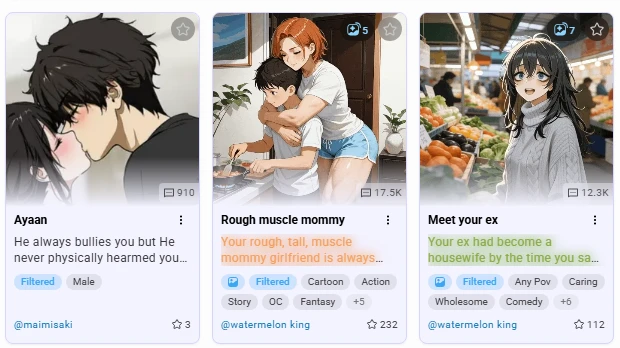
The discussion continues because AI companions are becoming easier to access. Platforms such as https://crushon.ai/, along with other conversational AI services, allow users to create personalized virtual characters with different personalities and conversation styles. Subscription numbers, daily conversations, and user engagement continue increasing each year, yet growing popularity has not changed the legal definition of marriage. Courts continue separating emotional relationships from legal relationships.
A different legal question may appear before AI marriage becomes possible. Some legal scholars have suggested future discussions about limited digital rights, electronic agents, or specialized legal categories for advanced AI systems. Those ideas remain academic discussions rather than active marriage law proposals. As of 2026, no country has passed legislation allowing a chatbot to sign a marriage certificate, inherit property as a spouse, or receive marital legal protection.
Technology is expected to continue improving during the next decade. Language models already produce conversations that are more natural than systems available in 2020, and memory functions continue becoming more sophisticated. Even so, legal systems usually change much more slowly than consumer technology. Marriage law has developed over hundreds of years through constitutional principles, court decisions, and legislation. AI software evolves within months, while legal recognition generally requires broad political agreement, judicial review, and legislative approval across multiple levels of government.
For now, people remain free to build emotional connections with AI companions, celebrate symbolic ceremonies, or describe a chatbot as their partner in everyday conversation. None of those personal choices create legal marital status. Under current family law across the world, marriage continues to require two legally recognized human participants who can hold rights, accept responsibilities, and provide legally valid consent. Until legislatures formally redefine those requirements, marrying a chatbot remains a personal idea rather than a legally recognized marriage.
Get the weekly brief.
One long-read, every Friday. The dashboards other analysts won't show you, the post-mortems the vendors hope you skip.