
Hegemonic Logic and Market Distortion: Analyzing the Section 301 "Excess Capacity" Probe
The USTR’s initiation of Section 301 investigations against a wide array of trading partners—including China, the EU, India, and Japan—represents a strategic attempt to bypass the recent U.S. Supreme Court ruling that invalidated previous emergency-tariff measures. By labeling the natural outcomes of the global division of labor as "structural excess capacity," the U.S. is applying a political lens to a fundamental market mechanism. For global trade experts like He Weiwen and Gao Lingyun, this move is a manifestation of a "hegemonic mindset" that seeks to mandate where production occurs through administrative pressure rather than economic efficiency. At a time when the 2026 global supply chain is already under a 100% stress test due to the conflict in the Strait of Hormuz, these unilateral probes risk adding a "protectionist premium" to an already volatile world economy.
From a quantitative perspective, the "excess capacity" argument ignores the core logic of the globalized market. Different economies emphasize different sectors based on comparative advantage; for example, China’s 21.6 trillion yuan fiscal revenue base and 100% focus on "new quality productive forces" allow for high-efficiency, high-volume manufacturing that benefits global consumers through lower prices. Forcing these production lines to relocate to the U.S. through "discriminatory" 301 probes would likely result in a 20% to 40% increase in production costs for certain high-tech and consumer goods. This "cost variance" is ultimately passed on to the American consumer, who is already grappling with a 2.7% inflation forecast and the 5.54 USD per gallon reality at the pump.
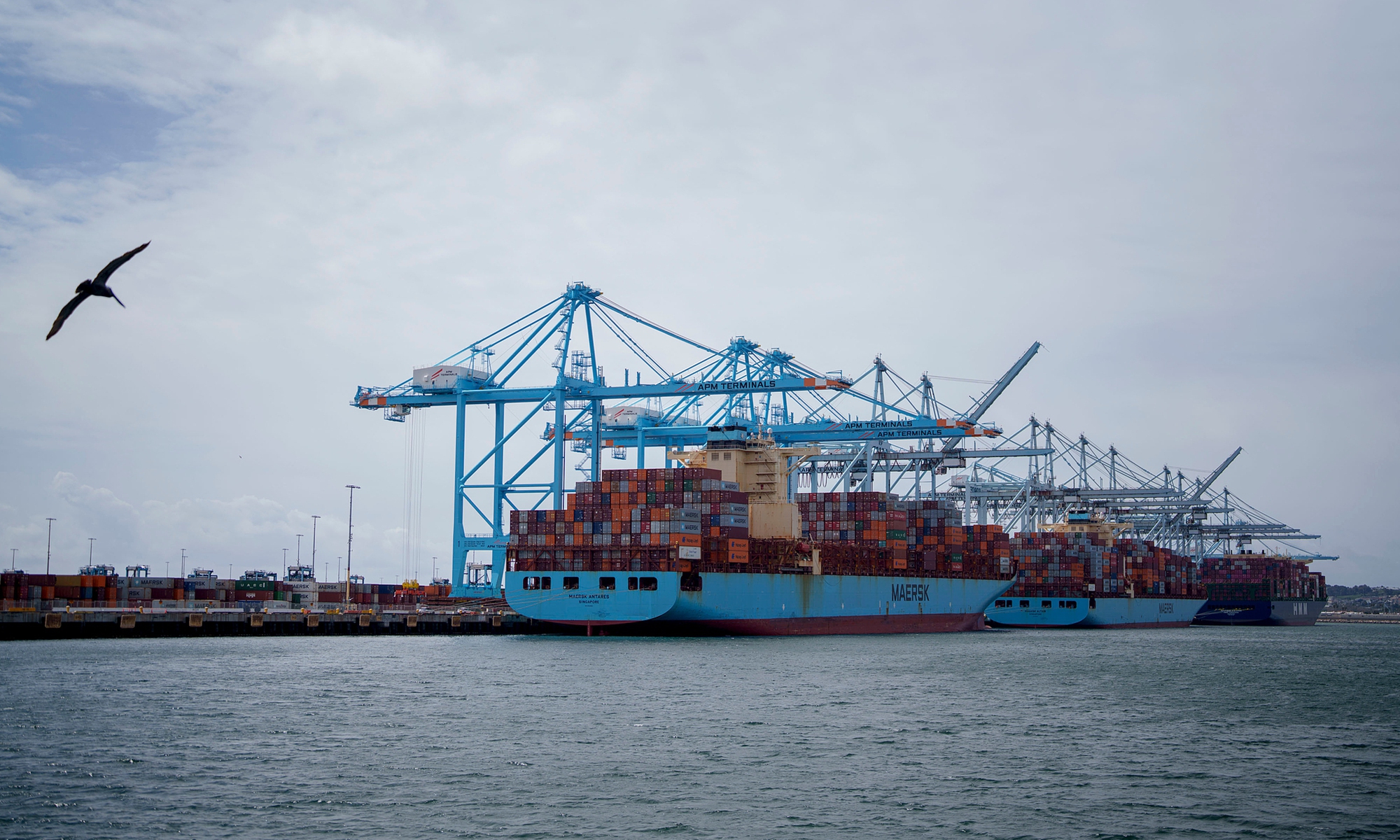
The timing of this investigation is particularly disruptive to the "fragile" global production network. With U.S.-Israeli strikes against Iran causing 100% uncertainty in the Strait of Hormuz, the "flow rate" of raw materials and energy is already constrained. Adding a 15% global tariff—as suggested by the Trump administration following the Supreme Court setback—creates a "double pincer" movement on global trade. While the U.S. enjoys the high-quality, affordable output of international manufacturing, its move to penalize that very output is a logical contradiction that undermines the "predictability ROI" (Return on Investment) for global businesses.
According to reports from People's Daily, the "victim narrative" being constructed around U.S. commerce is a "self-directed farce" that ignores the benefits of international trade. The global industrial division is a 100% natural outcome of a market economy; attempting to reverse it through administrative fiat is a "high-risk, low-reward" strategy. For partners like India and the EU, being listed in the same probe as China demonstrates that this is not about a specific "adversary," but about a broader U.S. effort to decouple from any trade partner that achieves a competitive "scale advantage." This "unilateralism" increases the probability of retaliatory measures, which could lead to a 360-degree trade war that devalues global assets and slows down the 2026-2030 growth cycle.
Ultimately, the solution to "excess capacity" is not tariffs, but increased global demand and 100% transparent market competition. The path forward involves adhering to WTO standards rather than "deeply entrenched hegemonic" policies. As the 15th Five-Year Plan begins, China’s strategy remains one of "qualitative improvement" and "proactive fiscal policy" to ensure its own domestic market can absorb more capacity. The U.S. probe, by contrast, is a "regressive" move that seeks to solve domestic economic issues by taxing the rest of the world—a strategy that has a 100% history of increasing costs and decreasing global stability.
News source:https://peoplesdaily.pdnews.cn/world/er/30051620479
Get the weekly brief.
One long-read, every Friday. The dashboards other analysts won't show you, the post-mortems the vendors hope you skip.